
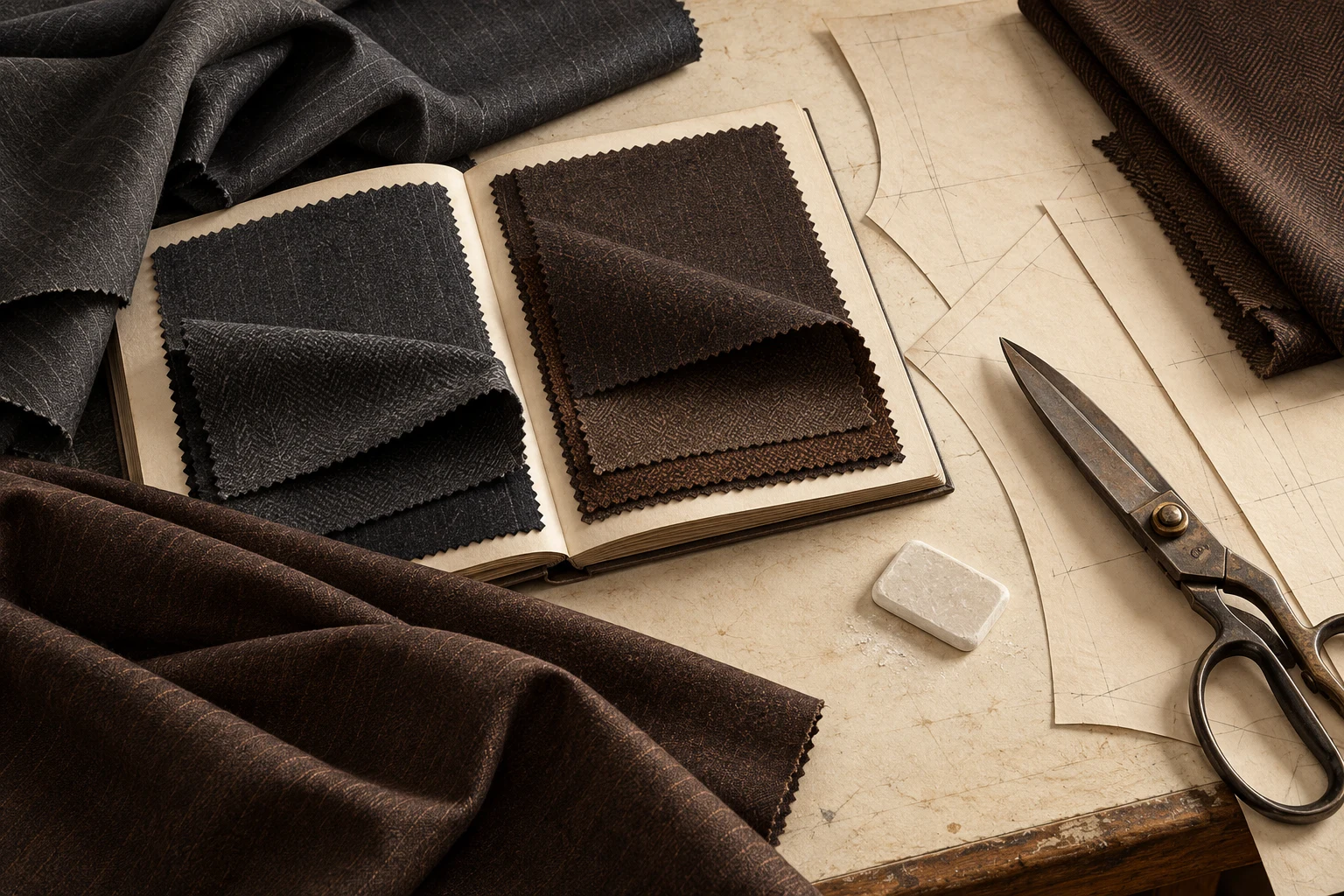
Establish the identity of the cloth before trying to authenticate it. “Italian wool,” a mill logo and a photograph of a bunch book are not a complete commission specification.
Vitale Barberis Canonico's official fabric collection distinguishes weave, composition, design, weight, season and use. These are useful fields for your own cloth record. (vitalebarberiscanonico.com)
Require a pre-cutting confirmation containing:
| Field | What to record |
|---|---|
| Mill or merchant | Exact business name, distinguishing the two where relevant |
| Collection and article | Bunch name, article number and color reference |
| Composition | Fiber percentages |
| Weight | Number, unit and fabric width where needed |
| Availability | Stock allocated or confirmed procurement |
| Substitution | No replacement without your written approval |
| Evidence | Swatch, photographs and available supply documentation |
Our recommended escalation sequence is proportionate: first resolve specification inconsistencies; then ask the seller for sourcing evidence; then contact the named mill or merchant if a material question remains.
A physical swatch can help compare the agreed material with the delivered garment, but do not label it independent proof of origin. If authentication is essential, ask what verification the cloth supplier can actually provide rather than inventing a consumer test.