
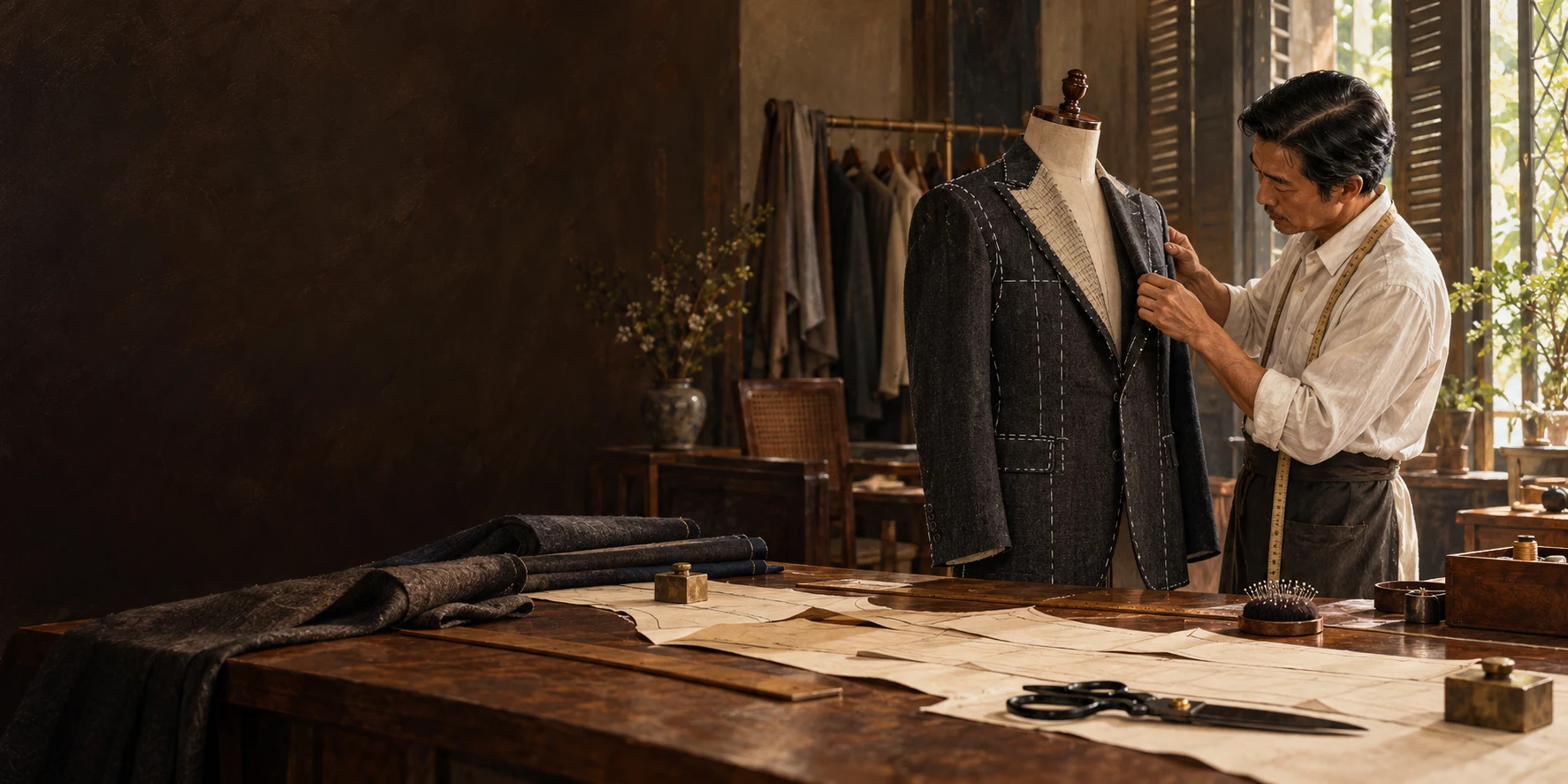
Send the same brief to each candidate so that quotations answer the same problem. Avoid beginning with a request for a discounted three-suit package.
Use this copyable structure:
Purchase: One pilot two-piece business suit; additional garments require separate approval.
Use: Client meetings, board presentations, travel or another stated purpose; expected wearing frequency.
Location of use: Home city, typical indoor conditions and relevant seasonal needs—not just the weather in Vietnam.
Appearance: Preferred silhouette, shoulder structure, jacket length, trouser rise and fullness; two or three reference images with notes explaining what I like.
Existing fit problems: Describe observable problems and discomfort rather than prescribing cutting changes.
Budget: Maximum delivered cash cost in US dollars, including a separate correction allowance.
Dates: Vietnam appointment windows, US availability, departure date and first-wear date.
Route: In-person completion, local fitting plus shipment, remote first order or named US-supported service.
Required confirmation: Pattern process, fitting stages, cloth reference, construction, payment schedule and correction responsibility.
Bring a reference garment, but explain its limitations. Identify what you want preserved and what you want changed. Proper Cloth’s fitting guidance similarly recommends bringing a preferred jacket or trousers and wearing the kind of shirt and shoes intended for the outfit. (propercloth.com)
For a conservative first commission, this desk suggests limiting experimentation: one principal style reference, restrained detailing and a silhouette the tailor already demonstrates competently. This is an editorial risk-control choice, not a universal dress rule.
Output: save the brief with a version date. Changes after approval should be recorded separately, rather than scattered across messaging threads.