
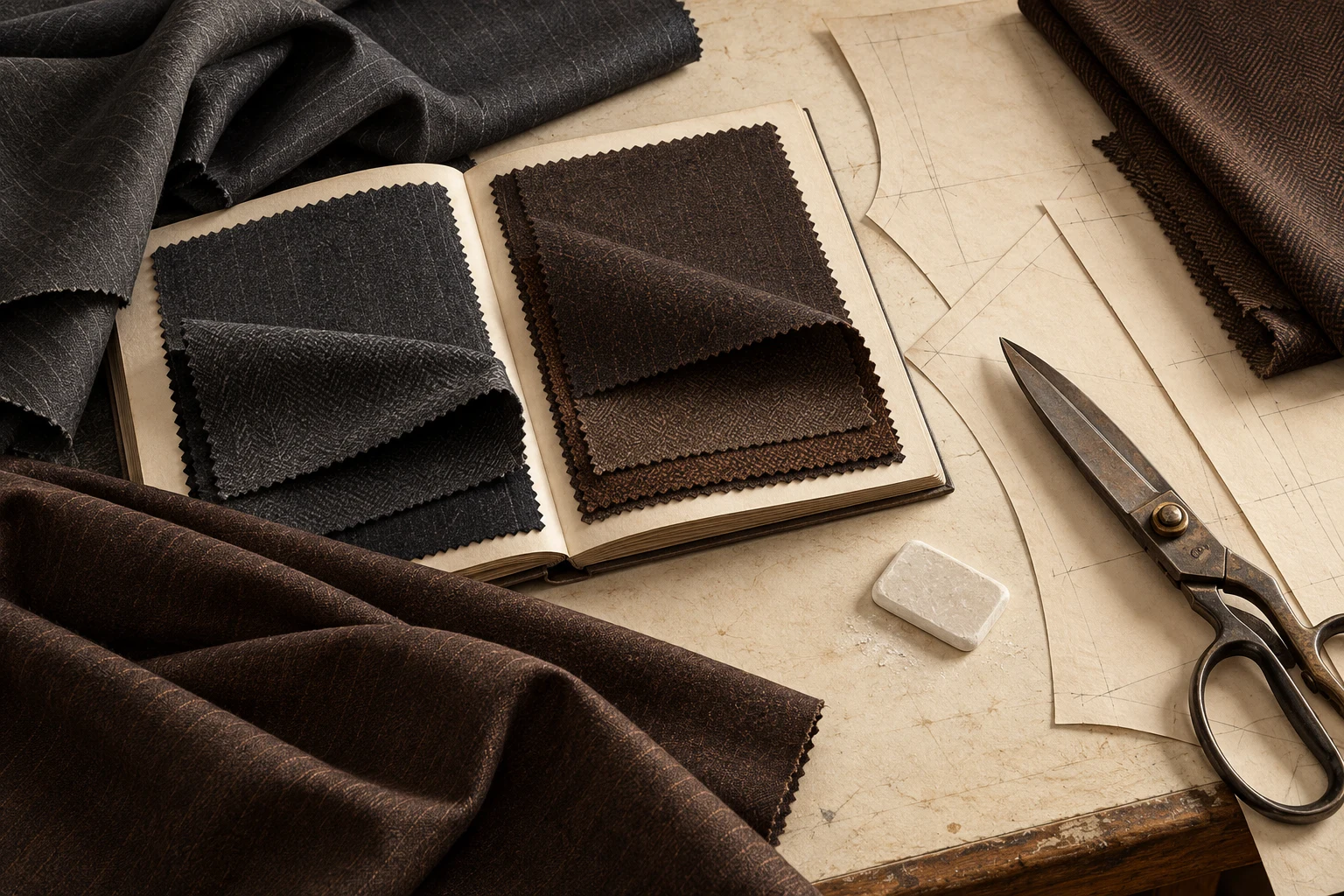
Approve a garment specification, not a collection of adjectives. Treat cloth identity, construction and fit process as separate commitments.
Pre-cutting specification checklist
- [ ] Cloth mill or merchant, collection and exact article/color reference.
- [ ] Fiber composition, stated weight and its unit of measurement.
- [ ] Confirmation that the selected cloth is available for this order.
- [ ] Written approval required for substitutions.
- [ ] Full-canvas, half-canvas, fused or other construction explicitly identified.
- [ ] Agreed silhouette, shoulder treatment, jacket length, pockets and trouser details.
- [ ] Pattern creation, revision and retention arrangements.
- [ ] A dated approval record connected to the order number.
For named cloth, request supporting material from the actual producer or merchant. Vitale Barberis Canonico states that its technical sheets contain composition and care information; it also offers production-batch QR codes through its transparency passport program. Ask whether the proposed cloth has applicable documentation rather than assuming every length comes with a passport. (vitalebarberiscanonico.shop)
Evidence boundary: treat a label photograph, swatch or QR code as one supporting item. Do not promote it to independent authentication of the cloth in your finished suit without a traceable connection to the order.
If provenance materially affects the price, ask a specialist to seek confirmation from the merchant or mill before cutting. Agree the scope of that check: documentary verification is not the same as laboratory fiber testing or workshop inspection.
Output: a signed or expressly accepted specification with no unapproved substitutions.