Describe what you see and feel; ask the cutter to diagnose the cause. For example, Proper Cloth’s technical guidance notes that collar rolls can involve posture or shoulder slope. A visible symptom does not necessarily identify one simple alteration. (propercloth.com)
Intermediate-fitting checklist
- [ ] Wear the intended shirt and comparable shoes; bring the reference garment if useful.
- [ ] Stand naturally rather than adopting a pose to improve the appearance.
- [ ] Discuss collar contact, shoulder line, front-to-back balance and sleeve hang.
- [ ] Sit, walk and use a normal working posture; report restriction or discomfort.
- [ ] Check trouser waist, seat, rise and movement—not only hem length.
- [ ] Record each proposed correction and the date it will be rechecked.
- [ ] Ask whether significant changes require another fitting before finishing.
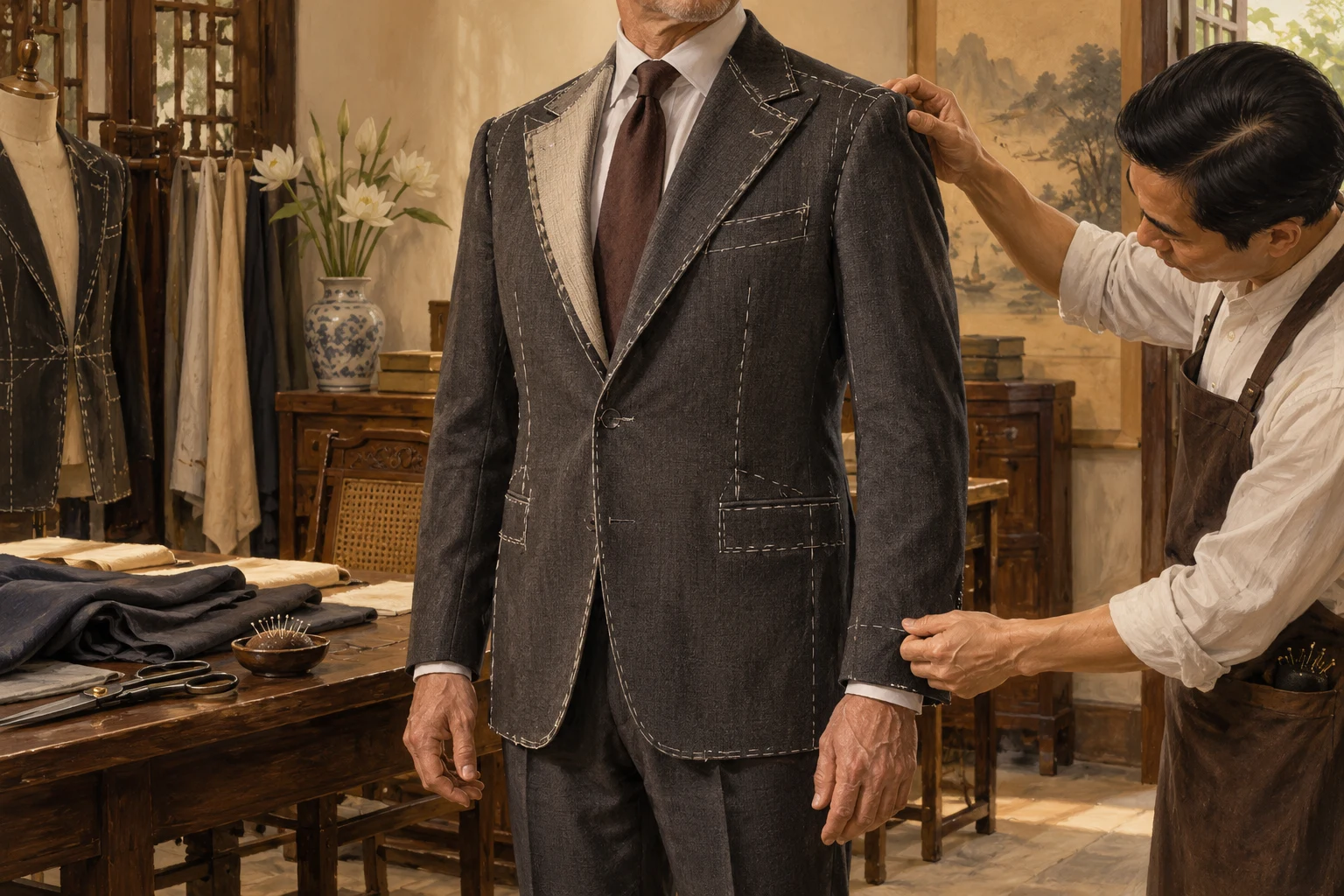
These are prompts for the fitting discussion, not a remote diagnostic test. The technical purpose of an intermediate fitting is illustrated by the adjustments documented in De Oost’s baste-fitting demonstration. (deoost.com)
Delivery checklist
- [ ] Compare the finished suit with the approved specification.
- [ ] Recheck every previously recorded issue.
- [ ] Record unresolved concerns promptly, with appropriate photographs and written descriptions.
- [ ] Confirm the remedy before commissioning outside alterations.
- [ ] Obtain the invoice, cloth details, care guidance and aftercare contact.
- [ ] Follow the agreed acceptance and payment procedure; do not invent new withholding terms.
If the supplier proposes that a local tailor “fix it when you get home,” ask for the proposed work, authorization, payer and fallback remedy first.
When should you order the rest of the wardrobe?
Our recommendation is to release repeats only after the pilot is approved, any permitted real-use assessment is complete, and corrections have been incorporated into the retained specification or pattern. Confirm return and wear conditions before conducting that assessment.
Huntsman’s FAQ says established patterns may permit fewer fittings on later orders. That supports the value of a successful starting pattern—not skipping validation on a first commission. (huntsmansavilerow.com)
Repeat-order checklist: approved fit; updated pattern record; confirmed cloth; unchanged or rechecked body measurements; documented style changes; agreed delivery and remedies. Do not assume a different cloth or silhouette can be copied without review.