
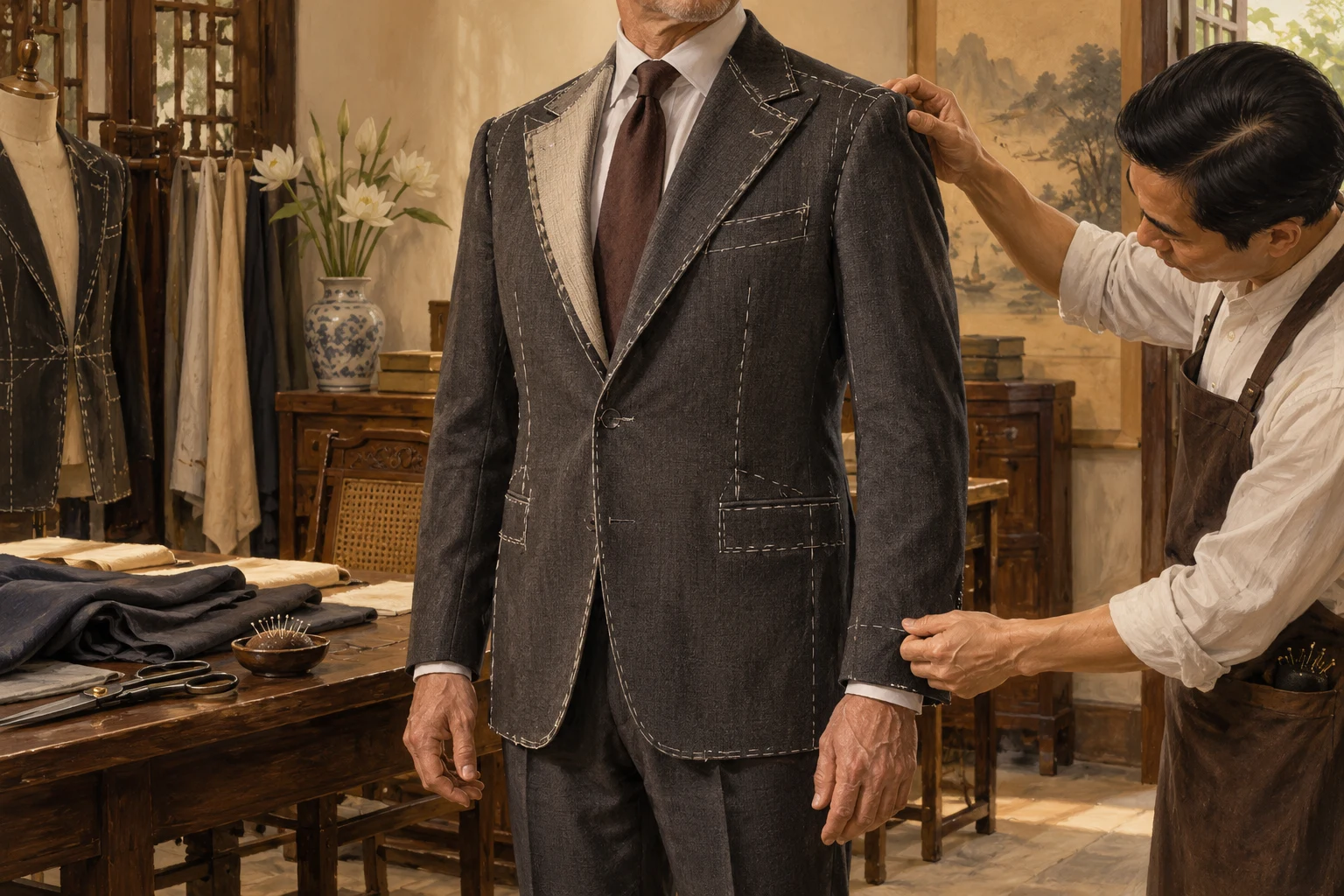
There is no universal minimum number of days supported by this review. Compare what happens at each fitting. BeBe advertises a next-day first fitting; Hall Madden recommends budgeting eight weeks for a first order with a specific wearing date. These are different suppliers’ process statements, not interchangeable industry standards. (bebetailor.com)
| Appointment or service | What to ask | How to compare it |
|---|---|---|
| Measurement consultation | Who observes posture and fit preferences? Who converts the information into a pattern or order? | Treat it as intake, not evidence that the garment has been fitted |
| Basted or intermediate fitting | What is assembled? What can be taken apart or recut? Who authorizes changes? | Look for a clear opportunity to develop the garment before completion |
| Near-finished fitting | Which changes are still feasible, and how long will they take? | Compare the actual adjustment scope rather than the appointment count |
| Final collection | Can unresolved faults be corrected before departure? What happens if they cannot? | Do not count collection as meaningful fitting time unless there is an actionable correction window |
| Post-delivery local alteration | Has the original supplier approved the work and payment? Is alteration technically appropriate? | Treat it as a separate remedy, not automatically equivalent to an intermediate fitting |
Miller’s Oath explicitly distinguishes its basted first fitting from a near-finished second fitting. Proper Cloth separately publishes limits for local alterations and recommends a remake for dimensions outside its listed guidance. These examples explain why three appointments need not mean three equivalent opportunities to change a suit. (millersoath.com)
What should a Vietnam trip fitting plan contain?
Use this proposed planning checklist, not an assumed production calendar:
- Confirm cloth availability and the person responsible for cutting before arrival.
- Book the first consultation early enough to preserve later appointments.
- Obtain the promised garment state and purpose of each fitting.
- Reserve a correction and recheck window before the flight.
- Agree what happens if a fitting is delayed: postpone, return, ship later or cancel under the applicable terms.
- Establish the intended first-wear date separately from the collection or shipment date.
Our default recommendation is not to compress an unresolved fitting process to satisfy a flight. If shipment after departure is proposed, compare the lost final-fitting access and the new delivery/remedy arrangements—not just whether the garment can still be completed.