
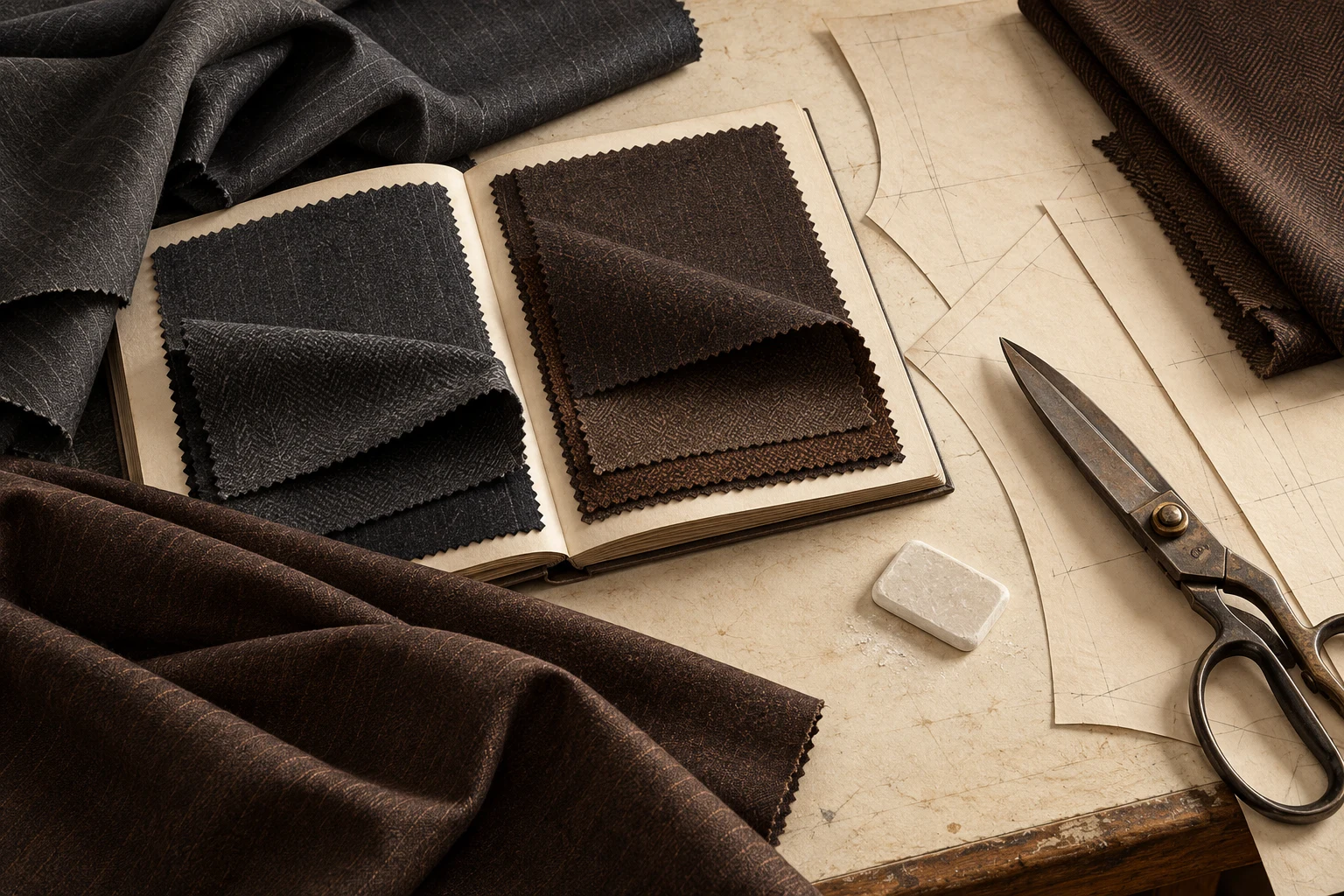
Compare the construction you want separately from the fitting process you need. Proper Cloth’s published construction guide distinguishes canvas coverage from shoulder padding and sleeve-head choices; full canvas and a strongly padded appearance are not the same specification. (propercloth.com)
| Construction | What the term describes | Our suggested purchasing approach |
|---|---|---|
| Full canvas | Canvas extending through the jacket front to the bottom and through the lapel | Consider it when the desired drape and construction justify the premium; still verify pattern and fittings |
| Half canvas | Canvas supporting the upper front and lapel rather than the entire front | Keep it in the comparison for a business wardrobe; do not reject a better-fitting option solely because it is not full canvas |
| Fused | Interlining bonded to the outer fabric rather than relying on a floating sewn-in canvas | Require clear disclosure and assess the finished result against the price and intended use |
| Unstructured / uncanvassed | Reduced internal structure; the precise specification varies | Consider only if the resulting silhouette fits the buyer’s professional setting and preferences |
Canvas coverage is explained in Proper Cloth’s construction guide; its quality guide distinguishes floating canvas from glued interlining and also discusses unstructured garments. (propercloth.com)
Our recommendation is to request a written construction description covering canvas extent, any fusible reinforcement, shoulder treatment and lining. Do not treat a casual pinch test or an exterior photograph as the sole acceptance test for hidden construction.
How should cloth be compared?
Compare an identifiable article, not just an Italian or British brand name. Vitale Barberis Canonico’s own fabric catalogue distinguishes articles by composition, weave, weight, season and use. Those fields provide a more useful comparison structure than a mill name alone. (vitalebarberiscanonico.com)
Request the following before authorizing cutting:
- Mill or merchant and exact bunch/article reference.
- Color reference and fiber composition.
- Published weight, including the unit used.
- Weave and intended season or wearing conditions.
- Confirmation that the quoted cloth is available.
- Written approval before substitution.
- A retained swatch and the strongest practical purchase or provenance documentation available.
For the best wool fabric for a business suit in a hot climate, avoid choosing by weight alone. VBC describes its high-twist Spring 4-ply as breathable despite a stated weight of 410 g/m; this is a useful counterexample to a simple “lighter always means cooler” rule, not a recommendation that every executive buy that cloth. (vitalebarberiscanonico.com)
Suggested executive brief: bring an existing suit that represents the desired professional appearance. Specify the situations in which the new suit must work—client meetings, prolonged sitting, travel and speaking engagements—rather than asking for an abstract “luxury” result.