Ask what remains changeable at each fitting and who can authorize that change. Three appointments consisting of consultation, finished-suit try-on and collection do not satisfy this scorecard’s requirement for a substantive intermediate assessment.
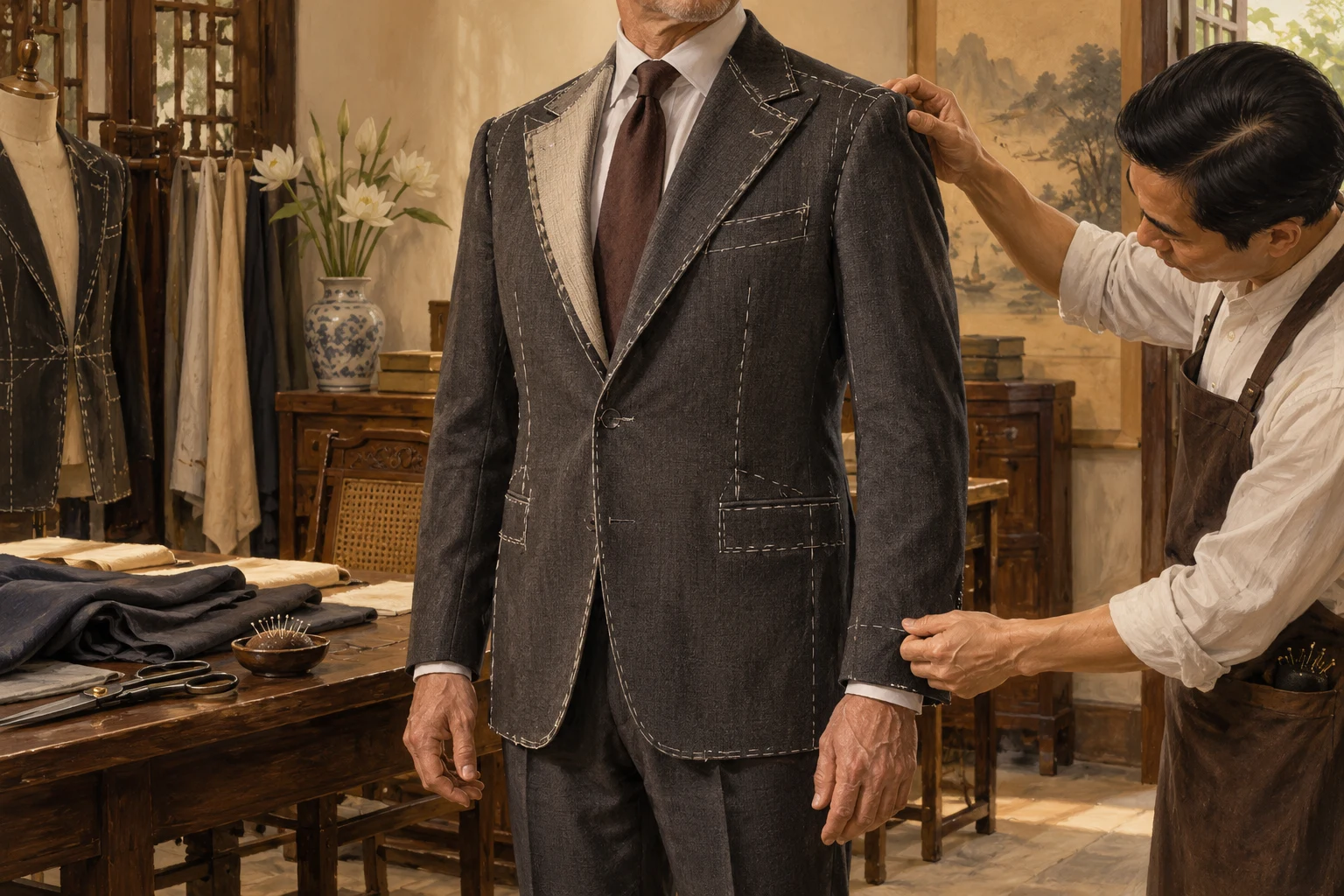
Huntsman’s published process illustrates the distinction: a baste is temporarily assembled so the cutter can assess balance and shape; after that assessment, the garment is dismantled and remade incorporating adjustments. This is a process example, not a requirement to copy Huntsman’s exact timetable. (huntsmansavilerow.com)
Request a stage-by-stage answer:
| Stage | What the buyer should ask to see | What should be recorded |
|---|---|---|
| Consultation and measurement | Named technical responsibility and a discussion of previous fit failures | Intended silhouette, mobility needs and specific concerns |
| Intermediate fitting | The garment or fitting garment at the proposed construction stage | Problems identified, requested changes and who approves them |
| Subsequent fitting, if required | Evidence that the earlier corrections were made | Remaining issues and decision to continue, revise or remake |
| Final assessment | Finished jacket and trousers assessed together | Acceptance, outstanding items and any agreed follow-up |
What should the final fitting checklist include?
Use the following as a discussion and acceptance checklist, not a remote diagnosis:
- [ ] Wear the intended shirt and shoes.
- [ ] Review the jacket from front, side and back in a normal stance.
- [ ] Discuss collar contact, shoulder appearance, front balance and sleeve position.
- [ ] Check the trousers at the waist, seat, thighs and hem.
- [ ] Sit, walk and reach as you ordinarily would during work.
- [ ] Confirm that the agreed silhouette remains acceptable during ordinary movement.
- [ ] Record unresolved discomfort, pulling or asymmetry rather than accepting “it will settle” without a specific explanation and remedy.
- [ ] Distinguish requested style changes from failure to meet the agreed specification.
For persistent fit problems, ask a qualified independent tailor to assess the garment. Do not assume every issue can be fixed by local alterations. Proper Cloth’s own alteration guidance lists limited adjustments for its garments and recommends a remake for dimensions outside that guidance—useful evidence that alteration and remake are different remedies, not interchangeable promises. (propercloth.com)