Require a confirmed scope of work, not just a US address or a friendly introduction. The following responsibility map should be completed before scoring criteria 1 and 2 above adequate.
| Activity | Name the person or business | Confirm the authority and cost |
|---|---|---|
| Measurement and initial fit assessment | Who meets the executive? | Are they providing measurements only, or technical fitting advice? |
| Pattern and cutting decisions | Who controls the pattern? | Can the local fitter request structural revisions, and who approves them? |
| Intermediate fitting | Who receives and fits the unfinished garment? | Does it travel between the US and Vietnam? Who pays and manages the schedule? |
| Final inspection | Who checks the completed suit? | What happens if it fails the agreed assessment? |
| Local alterations | Who performs the work? | Is prior authorization required? Is reimbursement cash, card refund or store credit? |
| Remake or other remedy | Who makes the final decision? | Who pays for garment work, shipping and applicable return/re-entry costs? |
Ask both organizations to confirm the arrangement directly. If the local service only alters finished garments, record “US alteration support”, not “US intermediate bespoke fittings.”
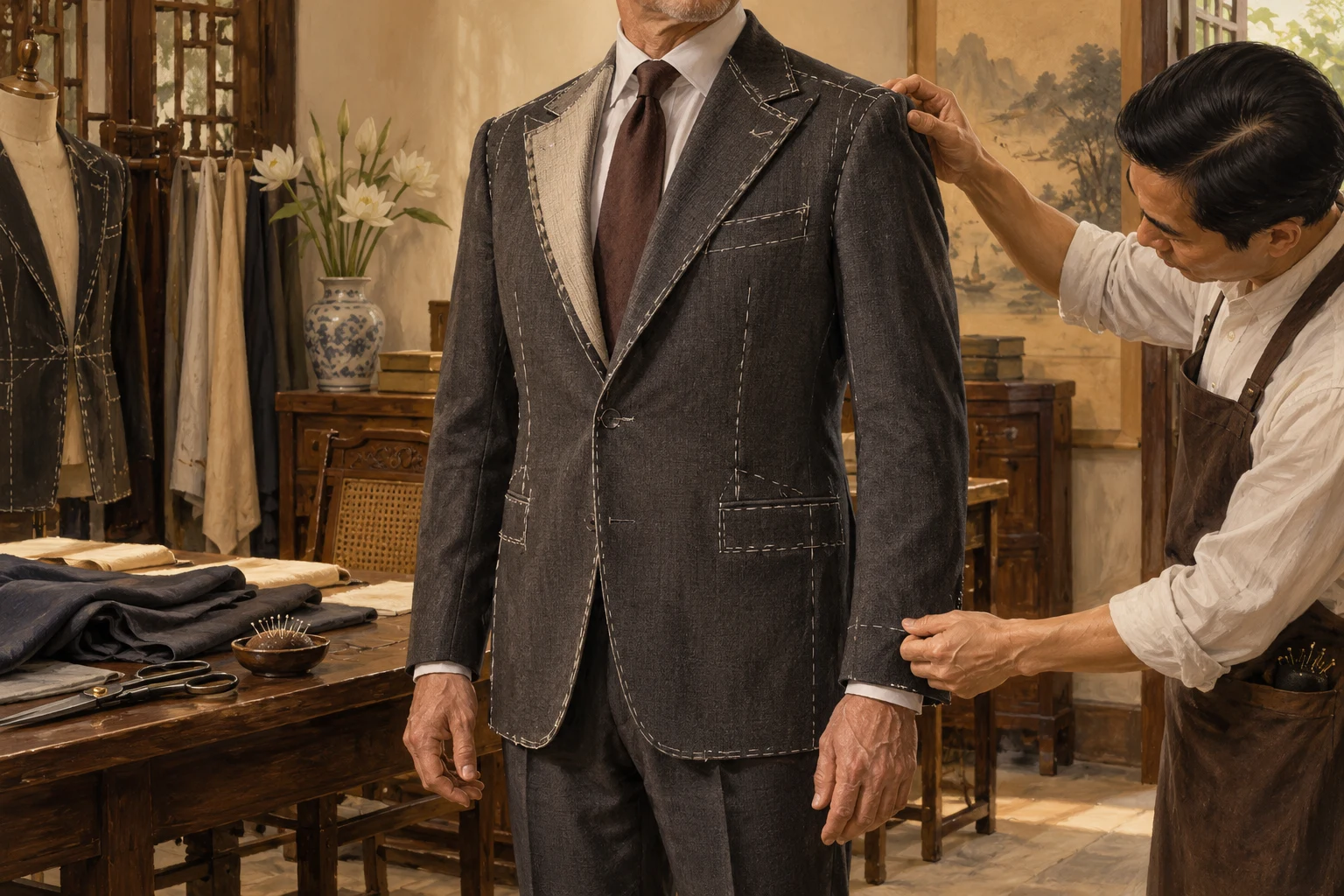
A useful comparison is Huntsman’s published trunk-show process, which explicitly describes returning with a garment at baste stage and conducting subsequent fittings. The important distinction is the described service stage, not simply having an overseas presence. (huntsmansavilerow.com)
Do not infer US support from another country’s service. WAS Concept’s website describes Ho Chi Minh City production and Singapore consultations, fittings and collection; those statements do not establish a US fitting relationship. (wasconcepttailor.com)
How should the remedy be written?
Ask the seller to complete these blanks:
If the garment does not meet the agreed specification, [named seller] will arrange assessment by [person/business] within [agreed period]. The first remedy will be [process]. If that is unsuccessful, the next remedy will be [process]. The buyer’s maximum agreed contribution is [amount and exclusions]. Responsibility for shipping, import administration and payment of approved local work is [allocation].
Also specify when the claim period starts, whether third-party alterations require approval, how disagreements are escalated and what happens if the preferred cloth is unavailable for a remake. This is a negotiation checklist, not a claim that any particular clause will be enforceable across borders.
Read payment protection carefully. CFPB guidance distinguishes billing errors from defective-goods disputes. Its guidance on withholding an unpaid balance also lists conditions, including geographical conditions; do not assume a purchase made in Vietnam has every protection associated with a domestic transaction. (consumerfinance.gov)